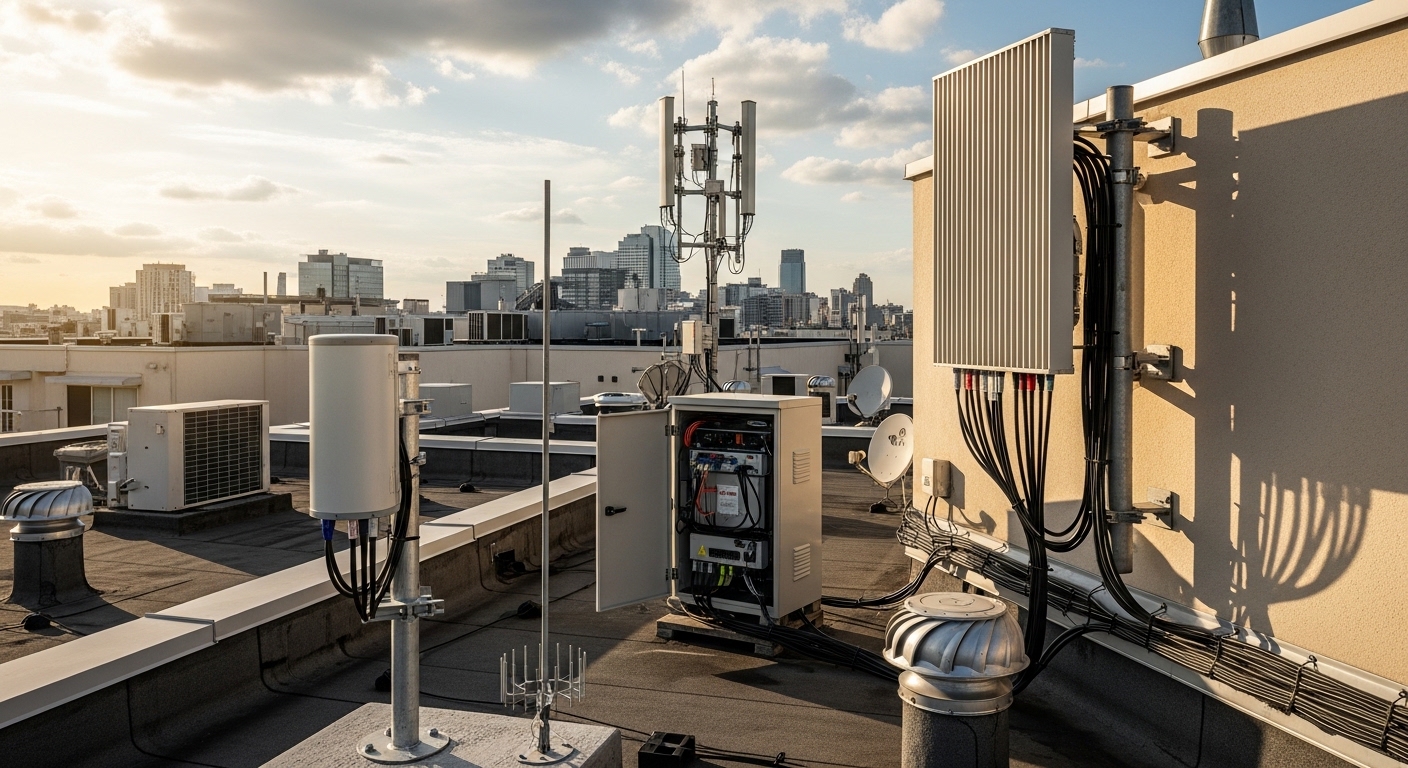
Selecting the right antenna system is one of the most critical decisions in network design. The antenna determines coverage patterns, capacity, interference levels, and ultimately the quality of experience for subscribers. With so many options on the market — from sector antennas to omnidirectional panels — making an informed choice requires a solid understanding of key RF principles and deployment goals.
Understanding Antenna Types
Sector antennas are the workhorse of macro cell sites, typically deployed in three-sectored configurations to provide 360-degree coverage. Panel antennas offer high gain and narrow beamwidth, making them ideal for covering highways and rural corridors. Omnidirectional antennas radiate equally in all directions and are commonly used for small cells, indoor distributed antenna systems (DAS), and fill-in coverage. Parabolic and Yagi antennas serve point-to-point backhaul links where directional precision is paramount.
Frequency Bands and Gain Patterns
Frequency selection directly impacts coverage and penetration. Low-band antennas (600–900 MHz) travel farther and penetrate buildings better, making them excellent for wide-area coverage. Mid-band (1.7–2.5 GHz) and high-band (mmWave) antennas deliver massive capacity but require denser deployments. Gain, measured in dBi, indicates how effectively an antenna concentrates RF energy. Higher gain means longer range but narrower coverage, so matching gain to the target area is essential.
MIMO Configurations and Selection Criteria
Modern networks rely heavily on MIMO technology to boost throughput. A 4x4 MIMO configuration uses four transmit and four receive antennas to multiply data capacity without needing additional spectrum. When selecting an antenna system, consider your coverage objectives, available spectrum, tower space, wind loading, and budget. Our engineering team at Telecom Tower Services can model coverage scenarios and recommend antenna configurations tailored to your specific network requirements.